How To Use Air Fryer: Easy Beginner Guide
To use an air fryer, place dry, seasoned food in the basket, set the temperature and cook time, then shake or turn the food during cooking. Most U.S. recipes use Fahrenheit. The air fryer cooks with fast-moving hot air, so it can brown food with less oil than deep frying.
Start with a small batch. Check the food early because air fryers often cook faster than a full-size oven. For meat, poultry, seafood, and leftovers, use a food thermometer rather than color alone.

What an Air Fryer Does
An air fryer is a small convection oven with a strong fan. It moves hot air around food in a perforated basket. This dry heat removes surface moisture and helps food brown.
An air fryer does not truly fry food in oil. It uses little or no added oil. A light coating can improve color and crispness, especially on fresh vegetables, potatoes, and breaded foods.
The basket needs space for air to move. If food sits in a thick pile, the pieces may steam instead of crisp.
Air fryers come in two main designs:
- Basket models: These suit small batches and quick foods such as wings, fries, vegetables, and fish.
- Oven-style models: These often hold more food and may use trays, racks, or a rotisserie function.
Cooking results vary by model, food size, starting temperature, and basket load. Treat package directions as a starting point, not a guarantee.
How to Use an Air Fryer Step by Step
Follow these steps for most air-fryer foods.
1. Read the manual first
Check the manual for:
- Maximum fill lines
- Preheat instructions
- Approved cookware
- Dishwasher-safe parts
- Cleaning limits
- Vent and clearance rules
- Whether the basket must be locked in place
Do not cover air vents. Keep the air fryer on a stable, heat-safe surface with open space around it. Exact clearance needs vary by model.
2. Prepare the food
Cut food into pieces of similar size. Even pieces cook at a similar rate.
Pat wet foods dry with a clean paper towel. Less surface water usually means better browning. This helps with potatoes, chicken skin, tofu, and vegetables.
Add seasoning before cooking. Use a small amount of oil when helpful. You can toss food in a bowl or use a spray made for cooking. Avoid spraying oil directly into a hot unit unless the manufacturer allows it.
3. Preheat when useful
Preheating is not always required. Some air fryers heat quickly, and many manuals allow food to go into a cold basket.
Preheating can help when you want:
- A fast sear on meat
- Crisp breading
- Better browning on a short cook
- More consistent results from batch to batch
A common starting point is 3 to 5 minutes at the planned cooking temperature. Follow the manual if it gives different instructions.
4. Add food in a single layer
Place food in the basket with room around each piece. A single layer gives the best airflow.
Some foods can overlap slightly. Fries, shredded vegetables, and small pieces usually need a shake. Large pieces of chicken or fish benefit from space between them.
Do not fill the basket above its marked limit. A full basket may need more time and may produce softer food.
5. Set the temperature and time
Use the recipe or package directions as a starting point. A useful first range for many foods is 350°F to 400°F, but the right setting depends on the food.
Set less time than the package says for a conventional oven when the package does not provide air-fryer directions. Begin checking early. Small air fryers may cook faster because the food sits closer to the heating element.
6. Shake or turn the food
Shake the basket halfway through cooking when the food is small and loose. This includes:
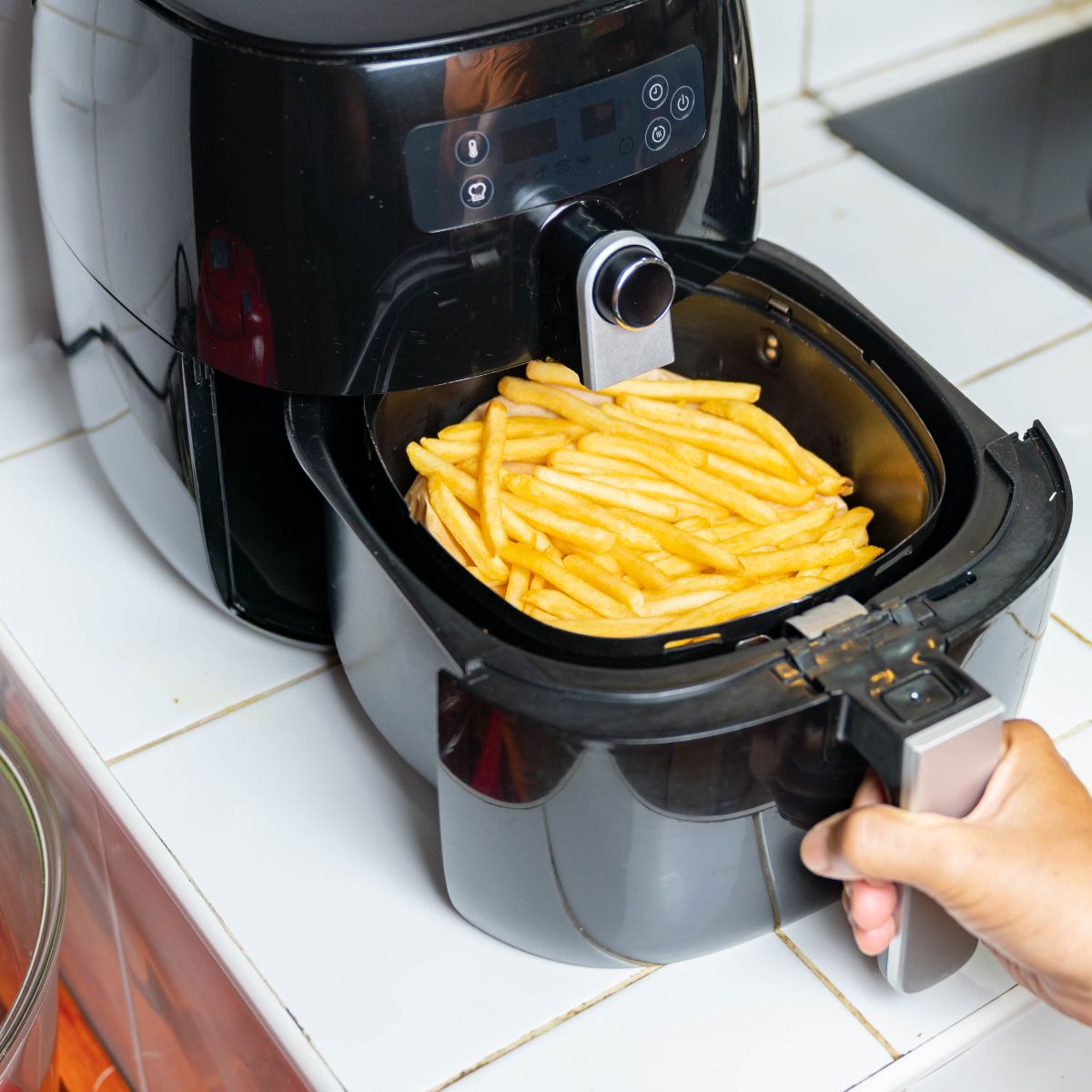
- French fries
- Tater tots
- Brussels sprouts
- Frozen vegetables
- Nuggets
- Small potato pieces
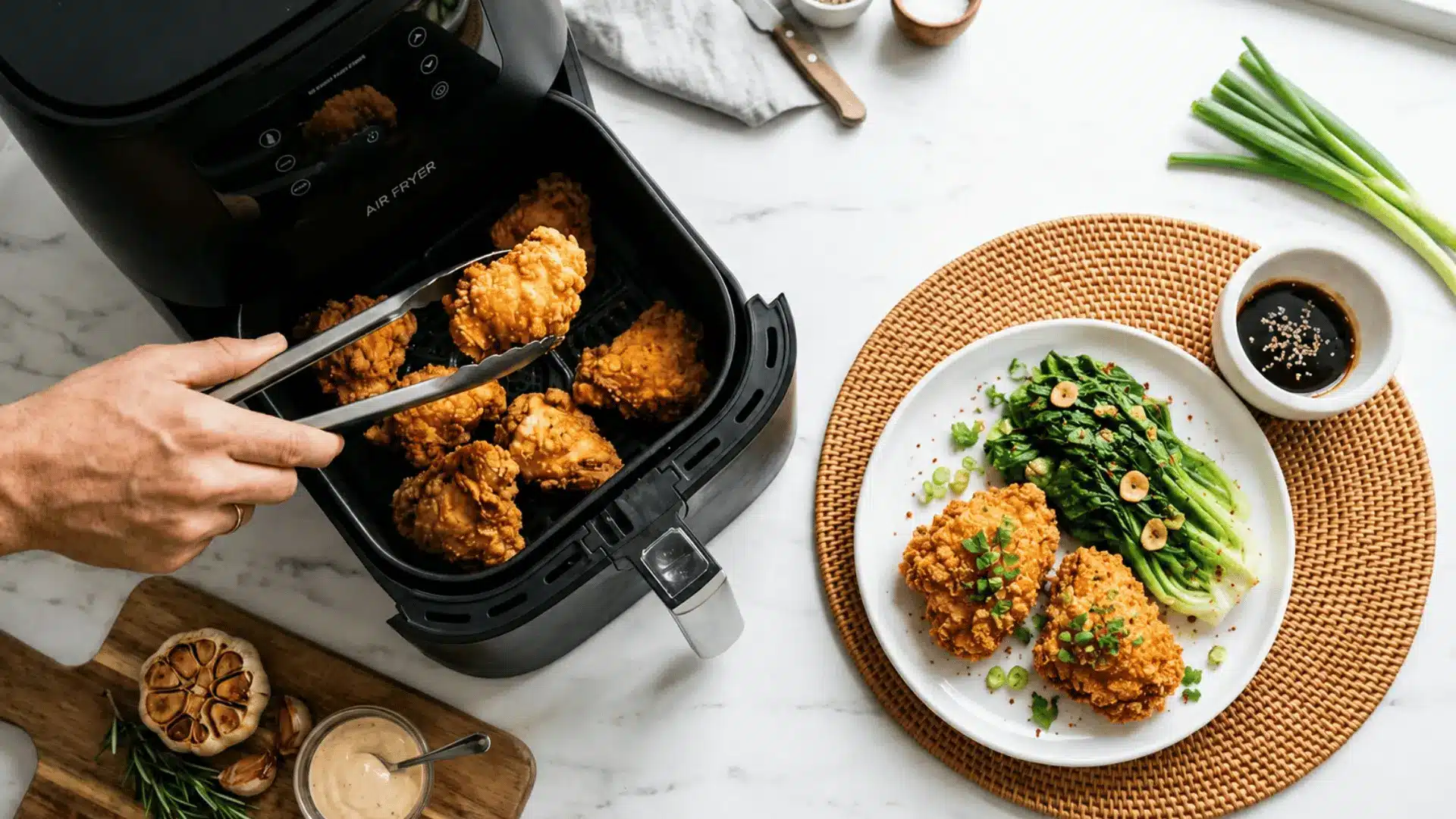
Use tongs to turn larger pieces such as fish fillets, chicken thighs, burgers, or toast.
Turning helps expose more surfaces to the moving heat. It does not replace proper spacing.
7. Check for doneness
Use sight, texture, and temperature together.
For foods that need a safe internal temperature, place the thermometer in the thickest part. Avoid touching bone or the basket, since that can give a false reading.
The U.S. Department of Agriculture lists these minimum internal temperatures:
| Food | Minimum internal temperature |
|---|---|
| Poultry, including chicken and turkey | 165°F |
| Ground meats | 160°F |
| Beef, pork, lamb, and veal steaks, chops, and roasts | 145°F, followed by a 3-minute rest |
| Fish and shellfish | 145°F |
| Leftovers and casseroles | 165°F |
Source: USDA Safe Minimum Internal Temperatures
8. Rest and serve
Let meat rest for a few minutes before cutting. The center may stay hot and the juices can settle.
Move crisp food to a plate or rack soon after cooking. Leaving it in the hot basket can make the bottom soft.

Air Fryer Temperature and Cooking Time Guide
The table below gives starting points for common foods. Exact times vary by model, food size, and whether the food is fresh, frozen, chilled, or partly thawed.
| Food | Starting temperature | Approximate time | What to do |
|---|---|---|---|
| Frozen French fries | 380°F to 400°F | 12 to 20 minutes | Shake two or three times |
| Tater tots | 400°F | 10 to 18 minutes | Shake halfway |
| Chicken wings | 380°F to 400°F | 20 to 30 minutes | Turn or shake |
| Chicken breasts | 375°F | 16 to 25 minutes | Check the thickest part |
| Salmon fillets | 380°F | 8 to 14 minutes | Check at 8 minutes |
| Broccoli florets | 375°F to 400°F | 8 to 14 minutes | Toss once |
| Fresh potato cubes | 380°F to 400°F | 15 to 25 minutes | Shake several times |
| Frozen vegetables | 375°F to 400°F | 8 to 15 minutes | Shake once or twice |
| Reheated pizza | 350°F to 375°F | 3 to 6 minutes | Check often |
| Toasted sandwiches | 350°F to 375°F | 5 to 9 minutes | Turn if needed |
These are cooking estimates, not food-safety guarantees. Use the package directions and a thermometer when required.
How to convert oven directions
For a food with conventional oven directions, start by reducing the oven temperature by about 25°F and checking the food earlier. This is only a starting method. Air-fryer baskets, fans, and heating elements differ.
For example, if a package says to bake at 425°F for 20 minutes, try 400°F and check after about 12 to 15 minutes. Adjust the next batch based on browning and internal temperature.
Do not reduce the temperature when the package gives a specific air-fryer setting. Follow that setting first.
How to Cook Common Foods in an Air Fryer
French fries and potatoes
For fresh potatoes, cut pieces to a similar size. Rinse or soak them if you want to remove some surface starch, then dry them very well.
Toss with a small amount of oil and seasonings. Cook at about 380°F to 400°F. Shake the basket several times so the pieces brown on more than one side.
Do not pack the basket tightly. Crowding is one of the main reasons fresh fries turn limp.
Chicken
Pat chicken dry before seasoning. A light oil coating can help the skin brown.
Cook chicken pieces in a single layer. Turn them when needed, and check the thickest part with a thermometer. Poultry should reach 165°F according to the USDA.
Breaded chicken can lose its coating if the surface is very wet. Press the crumbs on firmly and avoid turning the pieces too early.
Fish
Brush or lightly oil fish before seasoning. Handle thin fillets with care because they can break when turned.
Fish cooks quickly. Check early, especially with thin fillets. The USDA recommends 145°F for fish and shellfish.
A small piece of parchment made for air fryers may help prevent sticking, but it must not block airflow or touch the heating element. Only use it when the food holds it down.
Vegetables
Dry vegetables before cooking. Toss them with a small amount of oil and leave room between pieces.
Dense vegetables, such as carrots and potatoes, may need more time than soft vegetables, such as zucchini. Cut dense vegetables smaller or start them first.
Leafy greens can blow around in the basket. Use the manual’s guidance and avoid loose items that could reach the heating element.
Frozen foods
Many frozen foods work well in an air fryer because the hot air dries their surface quickly. Usually, you do not need to thaw fries, nuggets, fish sticks, or similar foods first.
Cook from frozen unless the package says otherwise. Shake small foods during cooking. Check the center of thick foods to make sure they are hot.
Frozen foods with heavy coatings may brown before the center is ready. Lower the temperature slightly and add time if needed.
Reheating leftovers
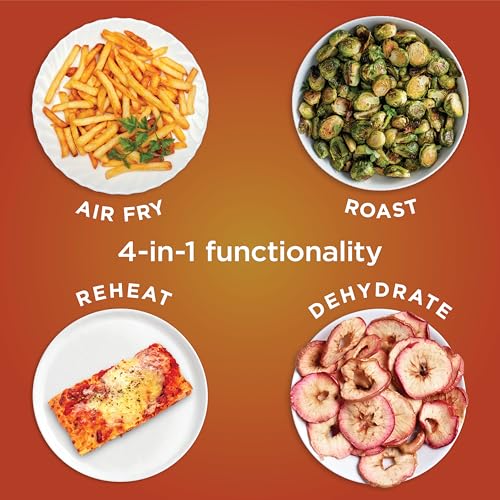
An air fryer can restore crispness to pizza, fries, roasted vegetables, and breaded foods. Use a lower temperature, such as 325°F to 375°F, and check often.
For dense leftovers, cut large pieces into smaller portions. Stir or turn food so the center heats evenly.
Leftovers should reach 165°F when reheated, according to the USDA.
How Much Oil Should You Use?
Use enough oil to lightly coat the food, not enough to pool in the basket. Many foods need no added oil, especially frozen foods that already contain fat.
Oil can help with:
- Browning
- Crisp edges
- Seasoning that sticks
- Preventing lean foods from drying
A brush, measured teaspoon, or light toss in a bowl gives more control than pouring oil into the basket.
Avoid aerosol sprays that may damage some nonstick coatings. Check the air-fryer manual and the spray label. Do not use cooking oil to fill the drawer like a deep fryer unless the manufacturer specifically designed the appliance for that purpose.
What You Should Not Put in an Air Fryer
Avoid items that can melt, burn, block airflow, or become unsafe.
Do not use:
- Loose paper towels
- Plastic containers not rated for heat
- Wax paper
- Wet batter without a supporting coating
- Large amounts of cheese by itself
- Loose herbs or light foods that may reach the heating element
- Any cookware the manual does not approve
Parchment paper and aluminum foil need special care. They can block airflow or lift into the heating element. Use them only if the manual permits them, keep them away from the element, and weigh them down with food.
Never pour water into a hot air fryer to create steam unless the manual specifically directs you to do so.
How to Clean an Air Fryer
Clean the basket and drawer after they cool. Food residue and grease can smoke during the next use.
A basic cleaning routine is:
- Unplug the appliance and let it cool.
- Remove the basket and drawer.
- Wipe away crumbs and grease.
- Wash removable parts with warm, soapy water if the manual allows it.
- Use a soft sponge rather than metal tools that may damage a coating.
- Wipe the heating area with a damp cloth when it is cool.
- Dry all parts before putting them back.
Do not submerge the main electrical unit. Do not use abrasive cleaners unless the manufacturer approves them.
If the air fryer smokes, stop the cycle if it is safe to do so. Let the unit cool, then remove grease and food debris. White smoke can come from fat, while dark smoke may signal burnt food or an electrical problem. Unplug the appliance and contact the manufacturer if smoke continues after cleaning or if you see sparks, damaged cords, or melted parts.

Common Air-Fryer Problems and Fixes
Food is not crisp
Likely causes:
- The basket is crowded.
- The food is wet.
- The temperature is too low.
- The food needs more time.
- Too much oil is pooling on the surface.
Try this: Dry the food, use a smaller batch, shake the basket, and add a few minutes. Do not simply raise the heat if the outside is already dark.
Food burns on top
Likely causes:
- Pieces are too close to the heating element.
- The temperature is too high.
- The food is small or thin.
- Sugary sauces were added too early.
Try this: Lower the temperature by 25°F, turn the food, and add sauce near the end. Check the manual for rack or tray placement.
Food cooks unevenly
Likely causes:
- Pieces are different sizes.
- Food is stacked.
- The basket was not shaken or turned.
- The food started partly frozen.
Try this: Cut pieces evenly, cook in batches, and turn food halfway through.
The air fryer smells or smokes
Likely causes:
- Grease is trapped below the basket.
- Old crumbs are burning.
- A fatty food is releasing grease.
- A protective film or packing material was not removed.
Try this: Stop the appliance if needed, unplug it after the cycle, and clean it when cool. Check for packaging and read the manual. Do not continue using the unit if smoke persists or electrical damage is visible.
The basket is difficult to clean
Soak removable parts in warm, soapy water if the manual allows it. Use a soft brush for holes and corners. Avoid sharp tools that can scratch the coating.
If grease remains, repeat the soak rather than using force. A damaged nonstick surface can make food stick more and may signal that the part needs replacement.
Air-Fryer Safety Rules
Use these habits every time:
- Place the air fryer on a stable, heat-safe surface.
- Keep vents clear.
- Do not leave it unattended for long periods.
- Keep the cord away from hot surfaces.
- Use oven mitts when handling the basket.
- Open the drawer away from your face because hot steam may escape.
- Keep children away from the hot basket and exterior.
- Use a food thermometer for meat, poultry, seafood, and reheated leftovers.
- Follow the manual for electrical, cleaning, and cookware limits.
The air fryer basket and food can remain hot after the timer ends. A timer only signals that the set time has passed. It does not prove that food is safe or fully cooked.
A Simple First-Use Method
For your first meal, choose a forgiving food such as frozen fries, vegetables, or chicken pieces.
- Wash and dry the removable parts if the manual permits.
- Place the air fryer on a clear, heat-safe counter.
- Preheat only if the manual or recipe calls for it.
- Add a small, even layer of food.
- Set a moderate temperature.
- Check the food several minutes before the expected finish.
- Shake or turn it halfway through.
- Confirm safe internal temperature when needed.
- Record what worked so you can adjust the next batch.
The goal is not to find one perfect setting. It is to learn how your model responds to food size, moisture, and basket load.
Key Takeaways
- Start with a small, dry, evenly cut batch.
- Leave space for hot air to move.
- Shake small foods and turn large foods.
- Check early because air fryers vary.
- Use a thermometer for foods that need a safe internal temperature.
- Clean grease and crumbs after the unit cools.
- Follow your model’s manual for lining, cookware, and clearance.
Frequently Asked Questions
Do you put oil in an air fryer?
Usually, you do not pour oil into the drawer. Toss food with a small amount of oil when you want more browning or crispness. An air fryer is not normally used like a deep fryer.
Do you need to preheat an air fryer?
Not always. Some models and foods work well without preheating. Preheating may help with short cooking times, crisp breading, and more consistent browning. Follow the manual and recipe instructions.
Can you put aluminum foil in an air fryer?
Sometimes, but only when the manufacturer allows it. Foil must not block the basket holes, cover the entire base, or touch the heating element. Food should hold it in place so it cannot blow upward.
Can you cook raw chicken in an air fryer?
Yes. Arrange raw chicken in a single layer and cook it until the thickest part reaches 165°F. Cooking time depends on the cut, thickness, starting temperature, and air fryer model.
Can you put frozen food in an air fryer?
Many frozen foods can go straight into the basket. Follow the package directions when available, shake small items during cooking, and check thick foods in the center.
Final Answer
The best way to use an air fryer is to keep the process simple: dry the food, avoid crowding, use a moderate temperature, shake or turn halfway through, and check early. Use a thermometer for meat, poultry, seafood, and leftovers. After cooking, remove the food and clean the basket once it is cool.