Best Portable Power Station For Camping: Smart Buyer Guide
The best portable power station for camping depends on battery size, output, charging speed, and trip length.
A quiet campsite can feel less relaxing when your phone, camera, lights, or CPAP machine needs power. A good portable power station solves that problem without the noise, fuel, or fumes of a gas generator. I compared three useful options for different camping styles. One is light and simple for short trips, one offers a large battery for longer stays, and one gives you a low-cost middle ground for basic camp power.
See the differences between my top picks at a glance.
EnginStar Portable Power Station 300W

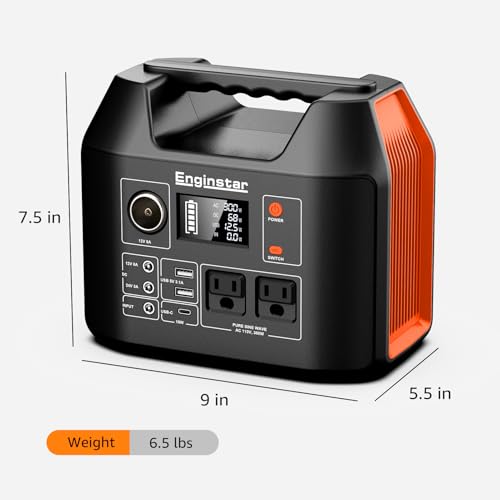
The EnginStar Portable Power Station offers a practical size for weekend camping. Its listed 296Wh battery gives you more reserve than a basic power bank. The unit also lists a 300W output and a pure sine wave AC outlet. That makes it a useful match for phones, lights, camera chargers, small fans, and other modest camp devices.
I like this model for campers who want a real AC outlet without carrying a large, heavy power station. The 80,000mAh backup rating may sound impressive, but watt-hours give a better idea of usable energy. You should still check the power draw of each device before your trip. A 300W rating does not mean every appliance will run safely or for a long time.
The pure sine wave output is a useful feature for sensitive electronics. It produces smooth AC power that better matches power from a home wall outlet. The unit also fits blackout backup needs, so it can serve beyond the campsite. For a small group, the capacity may cover a phone, LED lights, camera batteries, and a short laptop session.
Keep in mind that a 296Wh station has limits. A small electric heater, hot plate, or coffee maker can drain it quickly. It also may not suit a family that needs power for many devices over several days. Still, for light camping, road trips, and emergency charging, it offers a sensible balance of size and function.
Pros:
- 296Wh capacity suits short camping trips
- 300W output handles many small camp devices
- Pure sine wave AC outlet supports sensitive electronics
- Smaller and easier to carry than large-capacity units
- Useful for phones, lights, cameras, and laptops
- Can also provide backup power during short outages
Cons:
- Limited for high-watt appliances
- May need frequent recharging on longer trips
- The product listing does not include a solar panel
What Amazon Buyers Are Saying
Customer feedback for compact power stations often centers on easy setup, useful outlets, and enough power for small electronics. Buyers who choose this type of unit usually value its manageable size and its ability to charge several personal devices. The pure sine wave outlet also attracts people who want cleaner power for sensitive equipment.
The main concern with a station in this class is capacity. Some users expect a small unit to run large appliances and then feel disappointed when the battery drops fast. That is a normal limit of a 296Wh battery, not a flaw unique to this model. I suggest checking buyer comments for current details about charging speed, fan noise, and long-term battery behavior before placing an order.
My Recommendation
I recommend the EnginStar for weekend campers, anglers, photographers, and emergency use. It is a good choice when you need an AC outlet but do not want a large battery box. The value depends on your load. If you plan to run only lights, phones, cameras, and small personal devices, this model is worth considering.
| Category | Rating |
|---|---|
| Portability | 4.5/5 |
| Small-device performance | 4.3/5 |
| Output flexibility | 4.1/5 |
| Capacity for longer trips | 3.5/5 |
| Value for camping | 4.2/5 |
| Overall Rating | 4.2/5 |
BLUETTI Elite 100 V2 Solar Generator

The BLUETTI Elite 100 V2 is the strongest option in this comparison for long camping trips. It includes a 1024Wh battery and an 1800W AC output. The listing also states a 3600W surge rating, which helps with devices that need extra power for a brief startup. Most important for off-grid use, this package includes a 200W solar panel.
This is the portable power station I would study first for family camping or a base camp. A 1024Wh battery gives you much more room for lights, laptops, camera gear, fans, and other equipment. It can also support some higher-watt devices, but you must confirm each device’s running and startup wattage. Battery size does not remove the need to follow the power limits.
The stated 0-to-80 percent charging time of 45 minutes is a major convenience when you have access to suitable charging power. The listed 10ms UPS feature may also help during short power changes at home. In a campsite setting, the included solar panel gives you a way to restore energy during the day, subject to sunlight and panel conditions.
The trade-off is size and weight. A 1024Wh station with a high output rating will take more room than a compact power bank. It may also cost more than you need for a one-night trip. If you want the best portable power station for camping with high capacity and solar support, though, the Elite 100 V2 has the most complete feature set of these three picks.
Pros:
- Large 1024Wh battery for extended camping use
- 1800W AC output supports a wider range of devices
- 3600W surge rating helps with short startup demands
- 200W solar panel comes included
- Listed 0-to-80 percent charge time is 45 minutes
- 10ms UPS feature adds home backup usefulness
Cons:
- Larger and less convenient to carry than compact models
- May be more power than solo campers need
- Solar charging speed depends on sun, shade, and setup
What Amazon Buyers Are Saying
Buyers shopping for larger BLUETTI systems often praise the roomy battery, strong AC output, and broad use at campsites and home. Solar charging is another common reason people choose this type of package. Users tend to like having one unit for road trips, backup power, and outdoor work instead of buying separate chargers.
Common concerns for large stations include weight, storage space, and the need to understand charging modes. Some buyers also point out that real solar input changes with clouds, shade, panel angle, and cable setup. I recommend reading the latest customer feedback for exact user experiences with the included panel, display, app or controls, and fan sound.
My Recommendation
I recommend the BLUETTI Elite 100 V2 for families, long weekends, RV-style camping, and anyone who wants solar charging in the box. It costs more space and effort to move, but the capacity makes it far more flexible. This is my top overall choice when camping power needs are more than basic phone charging.
| Category | Rating |
|---|---|
| Battery capacity | 4.8/5 |
| AC output | 4.8/5 |
| Solar camping value | 4.7/5 |
| Charging convenience | 4.6/5 |
| Portability | 3.8/5 |
| Overall Rating | 4.6/5 |
Daran 89.6Wh LiFePO4 Power Station

The Daran portable power station is the smallest pick in this review. Its 89.6Wh LiFePO4 battery and 100W output suit light loads. The product listing also states a 200W peak rating, plus AC outlets and PD fast charging. For a solo camper, this can be a simple way to keep a phone, tablet, camera, or small light ready.
Its compact design makes sense when every inch of pack or car space matters. You can use it as a small generator for personal electronics rather than as a full camp power hub. The LiFePO4 battery chemistry is a useful feature for buyers who want that battery type in a portable unit. Solar charging is possible with an optional panel, so the panel is not part of the basic purchase.
The 100W output gives you a clear idea of its best use. It may power a laptop or similar device if the device stays within the output limit. It is not a good match for heating gear, cooking appliances, or other heavy loads. I suggest treating the 200W peak figure as a short burst limit, not as a normal continuous rating.
This model works best when you want a small backup battery with more options than a standard USB power bank. It can be a smart choice for day hikes with a vehicle nearby, short fishing trips, and simple overnight camping. If you need several days of power, choose a larger model instead.
Pros:
- Very small 89.6Wh format for easy transport
- LiFePO4 battery chemistry
- 100W output suits phones, tablets, and some laptops
- 200W peak rating provides extra short-term output headroom
- PD fast charging supports compatible devices
- Optional solar panel allows a flexible charging setup
Cons:
- Low capacity for group or multi-day camping
- Solar panel costs extra
- Not suitable for most high-watt appliances
What Amazon Buyers Are Saying
People who buy compact power stations often mention easy transport, convenient ports, and the benefit of having AC power in a small package. The LiFePO4 battery also draws interest from buyers who compare battery chemistry before choosing a charger. This type of unit usually appeals to campers who want personal power, not a large shared energy source.
The most likely complaint is limited runtime when users connect demanding devices. That issue applies to any 89.6Wh battery. Buyers may also note that the optional solar panel adds to the total cost and requires good sunlight. Before purchase, check current reviews for the exact device sizes, charging behavior, and port layout that matter to you.
My Recommendation
I recommend the Daran for solo campers and anyone who wants the lightest option here. It is worth buying when your needs focus on phones, tablets, cameras, and small lights. It is not the best choice for a family or a long off-grid stay. Its low weight and LiFePO4 battery make it a useful personal power source.
| Category | Rating |
|---|---|
| Portability | 4.8/5 |
| Personal-device charging | 4.2/5 |
| Battery technology | 4.4/5 |
| Capacity | 3.2/5 |
| Value for light camping | 4.3/5 |
| Overall Rating | 4.2/5 |
How to Choose the Best Portable Power Station for Camping
Choosing the best portable power station for camping starts with your actual devices. Do not choose by battery size alone. Look at watt-hours, running watts, startup watts, charging options, ports, and the way you travel. A solo backpacking trip has very different needs from a family base camp.
1. Match Battery Capacity to Your Camping Load
Battery capacity appears in watt-hours, or Wh. It tells you how much energy the battery stores. A rough estimate comes from multiplying a device’s watts by the hours you use it. For example, a 10W light used for five hours needs about 50Wh before normal conversion losses.
Real results vary. The AC inverter uses some energy, and devices do not always draw the same wattage. I like to leave a safety margin instead of choosing a station that barely meets the math. The Daran’s 89.6Wh capacity fits short personal use. The EnginStar’s 296Wh capacity gives more room for a weekend. The BLUETTI’s 1024Wh capacity fits longer trips and larger groups.
Make a simple list before you buy. Write down your phone, camera, laptop, lights, fan, CPAP machine, cooler, and any other device. Note the watts and hours for each one. If the total seems close to the station’s full capacity, move up to the next size.
2. Check Output, Ports, and Device Compatibility
Watt-hours tell you about runtime, while watts tell you what the station can run at one time. Check both numbers. A station with a high battery capacity can still fail to run a device if its AC output is too low.
Startup power also matters. Some motors and compressors need a short surge when they start. The BLUETTI listing gives an 1800W AC output and a 3600W surge rating. The EnginStar lists 300W, while the Daran lists 100W with a 200W peak. Compare these numbers with the device label or the maker’s manual.
Then count the ports. USB ports can charge phones without using the AC inverter. A USB-C PD port may charge compatible laptops and tablets with less waste. AC outlets help with standard plugs, but they can drain the battery faster. I also prefer a clear display, easy controls, and a flashlight for night use, though you should confirm each feature on the current product page.
3. Compare Charging Speed, Solar Support, and Total Value
A power station is only useful when you can recharge it. Look at wall charging, car charging, and solar charging. The BLUETTI package includes a 200W solar panel, which gives it a strong advantage for off-grid trips. The Daran supports an optional panel. The EnginStar listing supplied for this review does not include a solar panel, so check the current package before ordering.
Solar charging needs realistic expectations. Clouds, shade, panel angle, heat, and cable placement can reduce the input. A 200W panel does not always deliver 200W in the field. Place panels in open sun, adjust them during the day, and keep the station cool when possible.
Also compare the full cost. A low-priced station may need a separate panel, car cable, or protective case. A larger model may cost more but replace several smaller charging tools. Think about your trips, storage space, warranty terms, battery type, and return policy. The best portable power station for camping is the one that meets your load without forcing you to carry unused capacity.
Finally, use any power station with care. Keep it dry unless the product manual says otherwise. Do not cover vents. Protect it from extreme heat and freezing conditions. Use the correct cables, and follow the charging instructions. Never use an indoor power station as a reason to run a fuel generator inside a tent, vehicle, or enclosed shelter. A battery station has no fuel exhaust, but safe handling still matters.
Final Verdict: Which Should You Buy?
The BLUETTI Elite 100 V2 is my top pick because it combines 1024Wh, 1800W output, and an included 200W solar panel. Choose EnginStar for lighter weekend use, or Daran for compact personal charging.
The best portable power station for camping should match your real load. Check watt-hours, output, ports, charging options, and trip length before you buy.
FAQs Of Best Portable Power Station for Camping
What size portable power station do I need for camping?
Choose by device load and trip length. Around 90Wh suits personal charging, about 300Wh fits light weekend use, and 1000Wh or more works better for groups and longer stays.
Can a portable power station run a CPAP machine while camping?
It may, but runtime depends on the CPAP model, pressure settings, humidifier, and heated tubing. Check the CPAP watt draw and calculate expected watt-hours before your trip.
Is solar charging useful for a camping power station?
Yes. Solar charging can restore battery power away from an outlet. Results depend on sunlight, shade, panel angle, weather, and the station’s solar input limit.
Can I run a heater or coffee maker from a portable power station?
Only if the station’s continuous and surge ratings exceed the appliance requirements. These appliances use high wattage and can drain a small battery very fast.
Are LiFePO4 power stations better for camping?
LiFePO4 batteries appeal to many buyers because of their battery chemistry and long-term design. Still, compare capacity, output, weight, charging, warranty, and price rather than choosing by chemistry alone.