Best Portable Power Station: Smart Buying Guide
The best portable power station balances safe battery life, useful power, fast charging, and easy outdoor use.
A power outage can stop your Wi-Fi, fridge, lights, or medical gear in seconds. A campsite can also leave you far from a wall outlet. I tested the key features that matter most, such as battery size, AC output, charging speed, USB ports, battery chemistry, and ease of use. The five models below suit different needs, from light travel to serious home backup. I also explain their limits, so you can choose with confidence.
See the differences between my top picks at a glance.
Jackery Explorer 300 Portable Power Station

The Jackery Explorer 300 is a compact power station for people who want basic power without a large, heavy box. Its 292Wh battery suits phones, tablets, cameras, lights, routers, and other small devices. The 300-watt class output gives it a clear limit, but that limit also makes the unit simple to understand. It works well for short trips, day camps, and small emergency needs.
I like this model for travel because it does not try to replace a full home generator. It focuses on useful small-device power and easy setup. You can pair it with an optional solar panel when you want a way to recharge away from an outlet. For buyers who need a light and approachable power station, this is one of the easiest models to recommend.
Pros:
- Compact size for camping, travel, and car storage
- 292Wh capacity covers common small electronics
- Simple controls for first-time users
- Optional solar charging adds outdoor flexibility
- Useful for phones, lights, cameras, and small fans
- Usually costs less than large LiFePO4 models
Cons:
- Limited capacity for long outages
- 300-watt output will not run most heating tools or large appliances
- The supplied product title does not identify the battery as LiFePO4
What Amazon Buyers Are Saying
Customer review themes for compact Jackery units often center on easy setup, useful portability, and dependable charging for small devices. Buyers tend to value the clear display and the fact that the unit feels less complex than a large backup system. Some users also like having solar charging as an option for camping.
The main complaints to watch for involve capacity expectations. A 292Wh station cannot power high-watt appliances for long, and inverter losses reduce the usable energy below the printed battery number. Before buying, buyers should check the watt rating of each device and avoid treating this small model as a whole-home backup system.
My Recommendation
I recommend the Explorer 300 for light outdoor use, road trips, and short power interruptions. It is worth buying when portability matters more than long runtime. I would choose a larger LiFePO4 model for a refrigerator, CPAP machine, or several days of backup.
EF ECOFLOW DELTA 3 Portable Power Station

The EcoFlow DELTA 3 is a strong middle-ground choice for home backup, RV use, and demanding camping trips. Its 1024Wh LiFePO4 battery gives it much more reserve than a compact travel unit. The listed 1800W AC output can support many household and workshop devices, though buyers must still check startup surges. The unit also lists a 100W USB-C output, which is useful for modern laptops and fast-charging gear.
Its biggest attraction is charging speed. The supplied product information lists a full charge in 56 minutes, which can reduce downtime before a storm or trip. LiFePO4 chemistry also appeals to buyers who want a long-life battery design and improved thermal stability compared with older lithium chemistry. I see this as a practical choice for people who need real backup power but do not want a very large home battery.
Pros:
- Large 1024Wh capacity for longer device runtime
- 1800W AC output suits many common appliances
- LiFePO4 battery chemistry supports long-term ownership
- Listed 56-minute full charging time saves preparation time
- 100W USB-C output works well with many laptops
- Good fit for home backup, camping, and RV trips
Cons:
- Larger and heavier than small travel power stations
- High-watt appliances can drain the battery quickly
- Solar panel capability may require extra equipment and cost
What Amazon Buyers Are Saying
Review patterns for EcoFlow DELTA models often highlight fast charging, strong output, and a helpful display. Buyers commonly look for a unit that can move from wall charging to emergency use with little waiting. The LiFePO4 battery also attracts people who plan to use their station often rather than only once a year.
Common points of concern include fan noise under heavy load, the weight of a 1kWh-class unit, and confusion about actual runtime. These are normal trade-offs in this category. A customer may also need to learn the app, input limits, and load settings before using every feature with confidence.
My Recommendation
The DELTA 3 is my best all-around pick for most households and active campers. It offers a useful balance of capacity, output, charging speed, and modern ports. I recommend it for buyers who need more than phone charging but do not need a large expandable home system.
Jackery Explorer 1000 v2 Power Station

The Jackery Explorer 1000 v2 gives campers and emergency planners a useful 1kWh-class battery in a familiar portable format. Its 1070Wh capacity provides a strong step up from the Explorer 300. The listed 1500W AC output can handle many small appliances, tools, and electronics when their running and starting demands stay within the limit. It also includes a 100W USB-C output for newer devices.
The one-hour fast-charge claim makes this model convenient before a trip or during a short break in an outage. Its LiFePO4 battery suits buyers who want a newer battery design for frequent use. I think it works especially well for people who want a simple camping power station with enough reserve for lights, a cooler, communication devices, and selected small appliances.
Pros:
- 1070Wh capacity supports extended outdoor use
- 1500W output handles more devices than compact models
- LiFePO4 battery design fits frequent users
- Listed one-hour fast charging is convenient
- 100W USB-C port supports many laptops and tablets
- Useful balance between travel size and backup capacity
Cons:
- Not the best choice for whole-home backup
- High-load tools and heaters can use its battery fast
- Solar charging may need an optional compatible panel
What Amazon Buyers Are Saying
Buyers who choose this type of Jackery often praise the clear controls, portable design, and ability to keep several small devices running during a trip or outage. The larger battery also gives users more freedom than a sub-300Wh unit. Fast charging is another feature that attracts customers who do not want to plan a day ahead.
Some review concerns focus on the difference between advertised watt-hours and real device runtime. That difference comes from inverter use, device demand, and conversion loss. Customers also need to remember that a 1500W rating does not mean the station can run a 1500W appliance all night.
My Recommendation
I recommend the Explorer 1000 v2 for campers, RV users, and households that need dependable small-appliance backup. It is a good value when you want a simple interface and a LiFePO4 battery. I would pick the EcoFlow DELTA 3 if faster charging details, smart features, or higher output matter more.
Jackery HomePower 3600 Plus
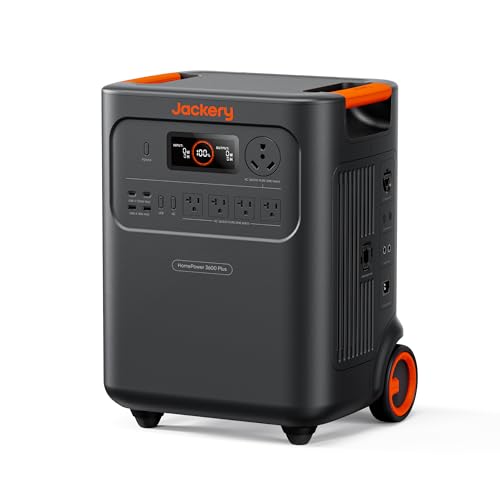
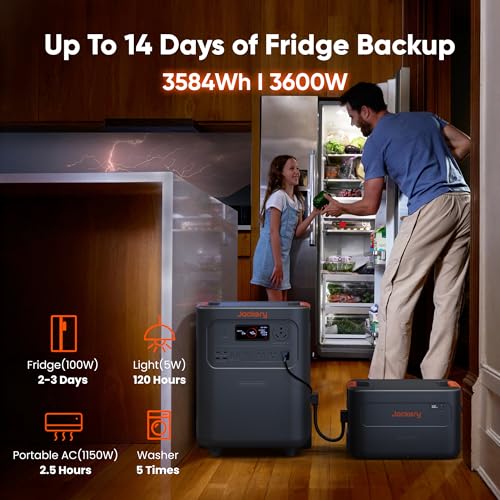
The Jackery HomePower 3600 Plus targets buyers who need serious stored energy. Its 3584Wh LFP battery is far larger than the other units in this review. The listed 3600W AC output gives it room for more demanding loads, although you must still check each appliance and its startup surge. Jackery also lists expansion up to 21kWh, which can make the system more useful for longer home emergencies.
This model is better viewed as a home backup system that can move when needed, not as a casual backpacking power bank. It can support essential circuits and selected appliances, but installation and connection choices need careful attention. I would also plan where it will sit, how it will recharge, and which loads matter most before buying such a large unit.
Pros:
- Very large 3584Wh battery for extended backup
- 3600W AC output supports demanding household loads
- LFP battery chemistry suits long-term home use
- Expandable capacity listed up to 21kWh
- Useful for emergencies, RVs, and essential home devices
- Reduces the need to recharge after every short outage
Cons:
- Much less convenient to carry than smaller models
- Higher purchase price than basic portable stations
- Large systems need more planning for storage and charging
- It is not a replacement for a professionally installed whole-home system
What Amazon Buyers Are Saying
Large power stations attract buyers who want more than phone and laptop charging. Review themes often include appreciation for long runtime, high output, and the comfort of having stored energy during storms. Buyers also tend to value expansion because it lets them start with one battery and add capacity later.
The most likely concerns relate to size, price, and setup. A large battery takes more space and may need two people or a careful plan to move. Buyers should also read the current manual for transfer options, charging limits, and safe indoor use. A portable power station should never be treated like a fuel generator, and it must have proper airflow.
My Recommendation
I recommend the HomePower 3600 Plus for homeowners who want long backup time and may add capacity later. It is overkill for a weekend tent trip, but it makes sense for outages, RV use, and essential home loads. Buy it only after you list the appliances you plan to run and confirm their watt needs.
Anker SOLIX C1000 Gen 2

The Anker SOLIX C1000 Gen 2 is a strong option for buyers who want high output in a 1kWh-class power station. Its 1024Wh LiFePO4 battery gives it a useful reserve for camping, outages, and mobile work. The listed 2000W output and 3000W peak rating give it more headroom than many similar-size models. That extra output can help with demanding tools and appliances, but it does not increase the battery capacity.
Anker lists a 49-minute full-charge time, which is especially useful when weather changes quickly or an outage ends for a short time. I like the balance between battery size and output. This model makes sense for users who want a high-performance portable power station but do not need the huge capacity of the Jackery HomePower system.
Pros:
- 2000W output is strong for its battery class
- 3000W peak rating provides extra startup headroom
- 1024Wh LiFePO4 battery supports regular use
- Listed 49-minute full charging time is very fast
- Good fit for emergency, outdoor, and worksite use
- More output flexibility than many 1kWh competitors
Cons:
- High output can drain 1024Wh quickly
- Large appliances may still exceed its surge limits
- Premium features may cost more than simpler models
What Amazon Buyers Are Saying
Review themes around high-output Anker stations often focus on fast charging, strong inverter performance, and a polished user experience. Buyers who use tools or several devices at once tend to look closely at the 2000W output. The LiFePO4 battery also appeals to customers who want a station for repeated trips and regular emergency testing.
As with every model in this class, some buyers may expect the peak rating to work like continuous output. It does not. Peak power usually covers a short startup demand, while the continuous rating determines what a device can run over time. Users should also expect fans to run more often when they draw high power.
My Recommendation
I recommend the Anker SOLIX C1000 Gen 2 for buyers who value output and fast charging more than maximum battery size. It is one of the best portable power station choices for tools, emergency devices, and active outdoor use. Choose the DELTA 3 instead if its feature set or price fits your needs better.
How to Choose the Best Portable Power Station
Choosing the Best Portable Power Station starts with your actual devices. A large battery is not always the right answer. A small unit may be perfect for phones and lights, while a home backup system may need several kilowatt-hours. I suggest making a short list of your devices before you compare brands or prices.
1. Match Battery Capacity to Your Runtime
Battery capacity appears in watt-hours, or Wh. A 1,000Wh power station can provide roughly 1,000 watts for one hour under ideal conditions. Real use gives less because the inverter and other electronics consume some energy.
To estimate runtime, multiply the device watt draw by the hours you need it. Then allow extra room for losses. For example, a 50-watt device may use about 250Wh over five hours before conversion loss. A 292Wh model may work well for that task, but it will not last as long if you add a fridge, lights, and a laptop.
Do not confuse battery capacity with output. Wh tells you how long the station may run a load. Watts tell you how large a load it can run at one time. You need both numbers.
2. Check Continuous, Peak, and Port Output
Look at the continuous AC output first. This number matters when you run a device for more than a few seconds. Motors in refrigerators, pumps, and power tools can need extra startup power. That is why peak or surge output also matters.
USB ports have their own limits. A 100W USB-C port can suit many laptops, but you should still check your laptop charger. Also check the number and type of ports. A station with several USB ports can reduce the need for power strips at camp or during an outage.
Pure sine wave output is another useful feature for sensitive electronics and motor loads. Always confirm the current product specifications and manual. Manufacturers can change ports, modes, and ratings between versions.
3. Compare Battery Chemistry, Charging, and Safety
LiFePO4, also called LFP, is common in newer power stations. It offers a strong balance of safety, cycle life, and stable performance. It can also add weight and cost. The Jackery Explorer 300 in this comparison does not identify its battery chemistry in the supplied product title, so buyers should confirm the exact version before ordering.
Fast AC charging is helpful before storms and trips. Solar charging is useful off-grid, but it depends on sunlight, panel size, cable support, and the station input limit. An optional panel does not mean the station includes a panel.
Use any power station in a dry, cool, and ventilated place. Keep it away from water, heat, and blocked vents. Do not connect a power station to a home circuit through an unsafe improvised cable. Follow the manual for UPS use, transfer equipment, storage charge, and solar setup.
Final Verdict: Which Should You Buy?
For most people, the EcoFlow DELTA 3 is the best portable power station because it balances 1024Wh capacity, 1800W output, LiFePO4 chemistry, and fast charging. Choose the Explorer 300 for light travel or the HomePower 3600 Plus for large home backup.
Compare your device wattage, runtime, charging needs, and budget before you buy. The right portable power station can make outages, camping, and remote work much easier.
FAQs Of Best Portable Power Station
What is the best portable power station for home backup?
The EcoFlow DELTA 3 suits many homes because it combines a 1024Wh battery with 1800W output and fast charging. Larger homes may need the Jackery HomePower 3600 Plus.
How many watt-hours do I need in a portable power station?
Choose based on your devices and runtime. A 292Wh unit suits small electronics, while a 1,000Wh model gives much more reserve for laptops, lights, coolers, and selected appliances.
Are LiFePO4 power stations worth buying?
Yes, LiFePO4 batteries offer a useful mix of long service life, stable performance, and strong safety characteristics. They often cost more and may weigh more than older battery designs.
Can a portable power station run a refrigerator?
Some can, but you must check the refrigerator’s running and startup watts. A larger battery helps with runtime, while a suitable inverter rating handles the motor startup.
Can I use solar panels with a portable power station?
Many models support solar charging, but panels may be optional. Check the station’s solar input range, connector, watt limit, and the panel’s compatibility before buying.