Best Air Purifier For Allergies: Cleaner Air
The best air purifier for allergies is the Levoit Core 300-P for quiet, simple, effective everyday air cleaning.
If dust, pollen, pet dander, or smoke makes your nose itch, a good air purifier can bring welcome relief. I tested the features that matter most, including HEPA filtration, room coverage, noise, odor control, smart settings, and filter care. These five models suit different homes and budgets. My top pick is compact and easy to use, while the larger Levoit, MOOKA, and WINIX models work better in open spaces or busy family rooms.
See the differences between my top picks at a glance.
Levoit Core 300-P Air Purifier

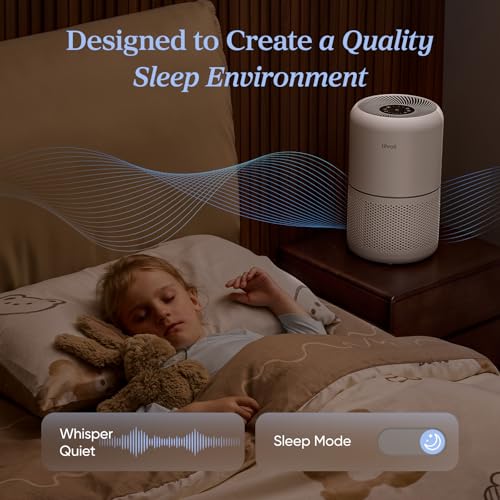
The Levoit Core 300-P is a strong choice for a bedroom, office, nursery, or small living area. Its compact body takes little floor space, so I can place it near a bed or desk without making the room feel crowded. The filter system targets common indoor pollutants such as dust, pollen, smoke, and pet odors. Levoit also lists AHAM verification for this model, which gives shoppers a useful point of comparison for room performance.
Sleep mode keeps the fan gentle at night, and the simple top controls are easy to learn. The purifier does not depend on an app, which may suit buyers who want fewer connected features. Its stated coverage reaches up to 1,073 square feet, but real results depend on room layout, ceiling height, and fan speed. For allergy relief, I would use it in the room where symptoms are worst and keep doors and windows closed when outdoor pollen levels rise.
Pros:
- Compact size fits bedrooms and offices
- Sleep mode supports quiet nighttime use
- Targets dust, pollen, smoke, and pet odors
- Simple controls do not require an app
- AHAM VERIFIDE labeling adds useful performance context
- Large stated coverage for a small unit
Cons:
- No built-in air quality display
- Odor control depends on the condition of the carbon filter
- Maximum coverage does not mean every room cleans equally fast
What Amazon Buyers Are Saying
Amazon buyers commonly praise the Core 300-P for its small footprint, simple setup, and low noise on the sleep setting. Many users choose it for bedrooms, pet areas, and rooms with seasonal dust. A common positive theme is that the controls feel straightforward and the unit is easy to move. As with most air purifiers, buyers also note that filter replacement adds an ongoing cost.
Some customer reviews mention that the fan becomes easier to hear on higher speeds. Others point out that the purifier cannot remove the source of an allergy, such as mold growth or dust inside a mattress. These comments match my view: this model works best as part of a wider cleaning plan, not as a stand-alone cure for allergies.
My Recommendation
I recommend the Core 300-P to anyone who wants an affordable, compact air purifier for allergies. It offers the most balanced mix of size, ease of use, and useful filtration in this group. Buy it for a bedroom or personal space rather than expecting one small unit to clean an entire open home.
Levoit Vital 200S-P Smart Air Purifier

The Levoit Vital 200S-P is my preferred large-room option for homes with pets or several allergy triggers. It covers up to 1,875 square feet according to the product listing and includes a built-in air quality monitor. That monitor can help me see changes in indoor air instead of relying only on smell or guesswork. The unit also includes smart controls, so I can adjust settings from a phone when the purifier sits across the room.
A 27 dB sleep mode makes this model suitable for a bedroom, even though its body is larger than the Core 300-P. Its pet-focused design makes sense for homes with loose fur and dander. I still need to vacuum floors, wash pet bedding, and keep the filter on schedule because an air purifier cannot collect every allergen from every surface. For a large bedroom, family room, or open living area, this model offers a useful blend of power and control.
Pros:
- Large stated coverage for bigger rooms
- Built-in air quality monitor provides useful feedback
- App support allows remote control and scheduling
- 27 dB sleep mode suits light sleepers
- Good fit for homes with pets and dander
- HEPA sleep mode supports continuous use
Cons:
- Larger and less portable than the Core 300-P
- Smart features require extra setup and phone access
- Replacement filters add to long-term ownership cost
What Amazon Buyers Are Saying
Amazon reviewers often like the Vital 200S-P for its strong airflow, pet-friendly design, and app controls. Buyers also tend to value the air quality display because it gives them a quick way to check changes after cooking, cleaning, or opening a window. The quiet sleep setting receives attention from people who run the purifier overnight.
Common concerns include the larger footprint and the need to replace filters over time. Some users prefer manual controls and may not need the app. I see this model as a better match for shoppers who will use the monitor and smart features, rather than buyers who only want a basic plug-in purifier.
My Recommendation
The Vital 200S-P is worth buying if you need the best air purifier for allergies in a larger room or a pet-friendly home. It costs more than a basic compact model, but its monitor, app, quiet sleep setting, and coverage make the extra size useful.
Levoit Vital 100S-P Pet Air Purifier
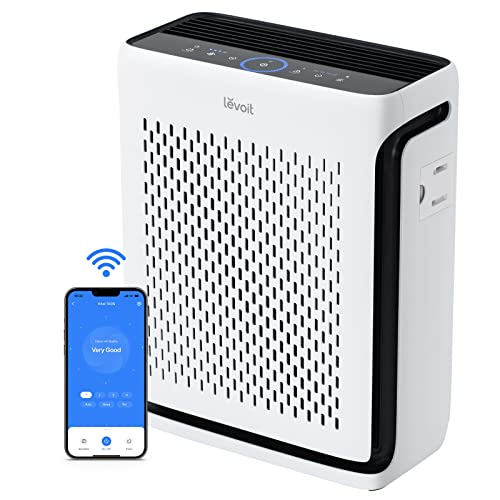
The Levoit Vital 100S-P sits between a small bedroom purifier and a full large-room model. It offers stated coverage up to 1,073 square feet and includes a washable pre-filter. That pre-filter can catch larger dust and pet hair before those particles reach the main filter. I like this design for homes with cats or dogs because regular removal of loose fur may help the main filter last longer.
This model includes a smart monitor and a quiet sleep mode. It can suit a bedroom, pet room, home office, or medium living space. The washable pre-filter needs proper cleaning and full drying before it goes back into the machine. Like all units in this review, it works best when I place it where air can move freely and avoid pushing it behind furniture.
Pros:
- Washable pre-filter helps manage pet hair
- Smart monitoring adds useful control
- Quiet sleep mode supports overnight use
- Stated coverage suits medium and larger rooms
- Designed with pet dander and odors in mind
- Useful middle ground between compact and large units
Cons:
- Washable parts need regular care
- Smart functions may feel unnecessary to some users
- Not as compact as a dedicated small-bedroom purifier
What Amazon Buyers Are Saying
Amazon buyers commonly mention the washable pre-filter as a helpful feature in homes with pets. Reviewers also appreciate the smart monitor and the ability to run the purifier quietly at night. Many shoppers choose this model because it feels easier to maintain than a unit that sends all visible fur straight into the primary filter.
Some buyers note that cleaning the pre-filter becomes part of the normal routine. Others mention that odor reduction varies with the amount and type of odor in the room. That is a fair limitation. A carbon layer can help with some smells, but it cannot replace source control, ventilation, or regular cleaning.
My Recommendation
I recommend the Vital 100S-P for pet owners who want easier filter care and smart monitoring. It is a practical choice for allergy-sensitive homes with regular fur and dander. Its value is strongest when you will actually wash the pre-filter and use the air quality features.
MOOKA PR1 Large Room Air Purifier

The MOOKA PR1 is built for shoppers who want broad stated coverage at a lower entry price. The product listing names coverage up to 2,200 square feet and uses an H13 True HEPA filter. It also includes a pet mode, an air quality display, and a sleep mode rated at 26 dB. Those features give this model a strong feature list for a large family room, apartment, or open living area.
The AQI display can make the purifier easier to understand during cooking, cleaning, or a high-pollen day. Still, I would not treat a large coverage number as a promise for every home. Room shape, airflow, filter condition, and fan speed all affect performance. Buyers should also confirm replacement filter availability before purchase, since ongoing filter access matters as much as the first price.
Pros:
- Large stated coverage up to 2,200 square feet
- H13 True HEPA filter listed for fine particle capture
- Pet mode supports homes with dander and fur
- 26 dB sleep mode is designed for quiet use
- AQI display offers at-a-glance feedback
- Strong feature set for budget-focused buyers
Cons:
- Large coverage claims depend on room conditions
- Long-term value depends on replacement filter cost and supply
- More display features may not appeal to minimalist users
What Amazon Buyers Are Saying
Amazon buyers often focus on the PR1’s large-room design, quiet sleep setting, and visible AQI display. Pet owners tend to value the pet mode, while other users like having a clear readout instead of a purifier with only basic buttons. The broad coverage claim also attracts shoppers who want one unit for a shared living space.
The main point to watch in customer feedback is room size. A purifier may feel fast in a closed room but slower in a large open layout. Buyers also discuss filter replacement as part of ownership. I suggest checking the current replacement options and measuring the room before placing an order.
My Recommendation
The MOOKA PR1 is worth considering when you want a large-room air purifier with a display and quiet mode at a competitive price. It offers impressive listed features, but I would verify filter availability and use realistic room expectations. It is a good value pick, not my first choice for the most proven overall balance.
WINIX 5510 Air Purifier

The WINIX 5510 is a large-room model for shoppers who care about both particles and odors. Its product listing describes True HEPA filtration, a high-deodorization carbon filter, auto mode, app support, and coverage up to 1,881 square feet in one hour. That combination makes it a strong choice for living rooms, kitchens, and homes where cooking smells or pet odors matter. The newer design also gives buyers a current alternative to older WINIX models.
Auto mode can adjust operation as the built-in sensor detects changes in air quality. App support adds another way to monitor and control the purifier. I like these features for users who want the machine to respond with less daily input. However, connected controls and extra filter layers can raise the total cost of ownership, so I would check replacement parts before buying.
Pros:
- True HEPA filtration for fine airborne particles
- High-deodorization carbon filter targets household smells
- Auto mode reduces the need for constant manual changes
- App support adds remote control
- Large-room coverage suits shared living spaces
- Useful option for smoke, pet odors, and allergies
Cons:
- Larger body needs more floor space
- App features may be more than some buyers need
- Filter replacement cost should be included in the budget
What Amazon Buyers Are Saying
Amazon buyers commonly like the WINIX 5510 for its automatic operation, odor control, and ability to handle large rooms. Reviews often highlight the convenience of app support and the value of a purifier that can react to changing indoor air. Buyers who deal with smoke or cooking smells may find the carbon filter especially appealing.
Some customer concerns center on fan noise at higher settings and the recurring cost of filters. That pattern is normal for a powerful purifier: more airflow usually creates more sound. I also recommend reading the setup steps before purchase if you do not enjoy connecting appliances to an app.
My Recommendation
The WINIX 5510 is a strong buy for large rooms, odor control, and hands-off operation. It may be the better choice than the Levoit Core 300-P when smoke or strong household smells are part of the problem. I recommend it to shoppers who value auto mode and app support enough to accept its larger size.
How to Choose the Best Air Purifier for Allergies
Choosing the best air purifier for allergies takes more than picking the biggest number on the box. I look at particle filtration, clean air delivery, room size, noise, filter cost, and daily use. The Environmental Protection Agency notes that filtration can improve indoor air, but it works best with source control and good ventilation. An air purifier should support cleaning and moisture control, not replace them.
1. Choose a Real Particle Filter
Dust, pollen, mold spores, and pet dander travel through indoor air. A high-efficiency particle filter can capture many of these small particles when air passes through it. Look for clear filter details, such as True HEPA or a listed high-efficiency filter. Do not focus only on the word “HEPA.” Check the full filter system and the brand’s room performance information.
Activated carbon helps with some gases and odors. It does not perform the same job as a particle filter. If smoke, cooking smells, or pet odors bother you, choose a model with a meaningful carbon layer. A thin carbon sheet may help with light odors, but heavy odors need source control and more ventilation.
2. Match Airflow to Your Room
Measure the room before you buy. A purifier rated for a small bedroom may struggle in a large open living area. Room coverage figures can vary by testing method, so I prefer models with AHAM information or clear performance details. The Clean Air Delivery Rate, often called CADR, gives a better idea of how fast a purifier can move cleaned air.
Place the purifier with open space around its air intake and outlet. Do not hide it behind a sofa or push it against a wall. Run it longer on a low or medium setting if noise bothers you. For allergy season, steady use often makes more sense than running a small unit for only a few minutes.
3. Consider Noise, Filters, and Daily Cost
A purifier only helps when you use it. Choose sleep mode if you plan to run it in a bedroom. Check the filter replacement period and current filter price before you order. A low purchase price can lose its value if replacement filters cost too much or prove hard to find.
Washable pre-filters can help homes with pets, but they still need regular care. Never put a damp filter back into the machine. Also check for a child lock, timer, air quality sensor, or app only if you will use those features. Simple controls often offer the best value for a bedroom, while smart controls can help in a large home.
Final Verdict: Which Should You Buy?
The Levoit Core 300-P is my overall pick for the best air purifier for allergies because it is quiet, simple, compact, and well suited to bedrooms. Choose the Vital 200S-P for large rooms, the Vital 100S-P for pets, or the WINIX 5510 for odors.
Use your purifier with regular cleaning, moisture control, and good ventilation. The right air purifier can reduce airborne particles and make indoor air feel fresher during allergy season.
FAQs Of Best Air Purifier for Allergies
Do air purifiers help with dust and pollen allergies?
Yes. A suitable particle filter can remove many airborne dust and pollen particles. It cannot remove allergens that have already settled on floors, bedding, or furniture.
Which air purifier is best for a bedroom with allergies?
The Levoit Core 300-P is my top bedroom choice. It has a compact design, sleep mode, and simple controls.
Is True HEPA better for allergy relief?
True HEPA filtration is designed to capture very small airborne particles. Check the full purifier design, airflow, and room rating instead of relying on the label alone.
Should I run an air purifier all night?
Yes, if the model is designed for continuous use and you follow its instructions. Use sleep mode to reduce fan noise while you rest.
How often should I replace an air purifier filter?
Follow the maker’s filter indicator and care guide. Replacement timing depends on use, fan speed, pets, smoke, dust, and indoor air quality.
Can an air purifier remove pet dander?
It can capture pet dander that becomes airborne. Regular grooming, vacuuming, and washing pet bedding still matter.